
The birch tree grows across the entire northern reach of this continent — from Newfoundland to Alaska, from the Great Lakes to the edge of the boreal forest. It was here long before we were, and the peoples who built their lives in its presence learned what it had to offer. Not all of that knowledge looked the same as what developed in Russia or Scandinavia. But the birch gave here too, in its own way, on its own terms.
The story of birch tar in North America is shorter than its European counterpart. But it's real, and it connects to something much older and much wider than any single continent's tradition.
The Same Tree, a Different Relationship
In Russia, the birch was rendered down into tar through careful, deliberate distillation — a process so embedded in daily life that it shaped commerce, medicine, and craft across an entire civilization. In North America, the relationship with the birch took a different form, but it was no less intimate and no less skilled.
Indigenous peoples across the northeastern forests and the boreal region understood the birch tree comprehensively. The Ojibwe, Cree, Abenaki, Mi'kmaq, Algonquin, and Athabascan peoples, among many others, built their material culture around it. The bark was their canvas, their shelter, their vessel. It was used for canoes and wigwam coverings, for baskets and containers, for maps and ceremonial scrolls, for torches, tools, and children's sleds. Long before ceramic vessels existed in the northeast — more than 3,000 years ago — birch bark containers were already being used to collect, store, and cook food.
The bark was chosen for good reason. It is naturally waterproof, flexible, resistant to rot, and light. The same oils and resins that make it so useful as a material — compounds including betulin and lupeol concentrated in those white outer layers — are the same compounds that make birch tar medicinally powerful. Indigenous peoples understood this intuitively, even without the language of chemistry to describe it.
 image White birch in the Canadian boreal forest — the same tree, the same bark, the same gifts
Pitch, Seal, and the Art of the Canoe
The closest parallel to the European use of birch tar in North America is found in canoe construction — and it tells you everything about how these cultures approached the materials the forest offered.
The birch bark canoe is one of the most remarkable pieces of engineering ever produced by human hands. Light enough to be carried over a portage, strong enough to carry several adults and hundreds of pounds of cargo, and perfectly suited to the rivers, lakes, and coastal waters of northern North America — it was the technology that made this landscape navigable. The knowledge required to build one well was hard-won, carefully held, and passed down through generations.
Sealing the seams was essential. Where sheets of bark met — at the bow and stern, along the gunwales, anywhere water might find its way in — the canoe needed to be made absolutely tight. Different nations developed their own pitch formulas for this work. The Mi'kmaq used a traditional pitch made from spruce gum, bear grease, and hardwood ash — a carefully balanced combination that stayed flexible in cold water and held fast under stress. The Ojibwe and other Great Lakes nations developed their own variations. What they all shared was the recognition that the forest provided everything required, and that the skill was in knowing how to combine it.
This isn't distilled birch tar in the Russian sense. But it speaks to the same understanding: that the trees of the northern forest contain chemistry worth extracting, that heat and knowledge can unlock something the raw material alone cannot provide, and that a well-made natural preparation outlasts anything cobbled together without care.
The Mi'kmaq and Maskwio'mi
Among the documented uses of birch tar as a deliberately produced substance in North America, the Mi'kmaq people of eastern Canada stand out clearly.
In Mi'kmaq tradition, birch tar extract is known as maskwio'mi — and it was used as exactly what centuries of European folk medicine also recognized it to be: a broad-acting antimicrobial ointment. Applied to wounds, skin infections, and irritations, it was a first-line treatment passed down through oral history, produced from birch bark through a process of heating and collection not unlike the methods used across the Atlantic.
This knowledge did not arrive from Europe. It developed independently, from the same tree, the same bark, the same fundamental chemistry. Recent research — including a 2026 study published in PLOS One examining birch tar's antibacterial properties — specifically cited Mi'kmaq use of maskwio'mi as ethnographic evidence that the antimicrobial qualities of birch tar were recognized across geographically separate cultures without any shared tradition. The researchers tested birch tar produced by several methods and found it consistently effective against Staphylococcus aureus, one of the most common bacteria behind skin infections. The Mi'kmaq had known this for generations.
 Birch bark — the source of maskwio'mi, used by the Mi'kmaq as a wound treatment and skin ointment
A Continent Full of Birch, a Different Set of Priorities
Why didn't birch tar develop the same industrial and commercial footprint in North America that it did in Russia and Scandinavia? The honest answer is that it didn't need to.
In Russia, birch tar filled specific roles that the landscape and the economy demanded — leather preservation for trade, axle grease for wheeled transport, wood sealant for permanent structures. These were the needs of a particular kind of civilization building itself across a particular kind of terrain. The knowledge deepened because the demand was constant and the stakes were real.
In North America, Indigenous peoples had developed solutions to the same underlying problems — waterproofing, preservation, adhesion, medicine — using the full range of what the forest offered. Spruce gum was abundant and effective for sealing. Bear grease served where animal fat was needed. The birch bark itself, with its natural oils intact, was often sufficient for the purpose at hand. The need to push further into distillation simply arose less often, because the toolkit was already complete.
This is not a gap in knowledge. It is a different and equally sophisticated relationship with the same forest. People who can build a watertight vessel from bark, roots, and natural pitch — one that outlasts its builder when properly maintained — have nothing to prove about their understanding of materials.
Where the Traditions Meet
What strikes me about this story is not the differences between how the birch was used in North America versus Russia or Scandinavia. It's the convergence.
Across cultures that had no contact with each other — Neanderthals in Germany 50,000 years ago, Siberian healers, Scandinavian shipbuilders, Russian peasants, and Mi'kmaq people in eastern Canada — the birch tree offered up the same fundamental gifts, and people found them. Antimicrobial protection. Waterproofing. Adhesion. Preservation. The chemistry doesn't change based on who is asking. The birch is the birch, whether it's growing on the banks of the Volga or the shores of the Restigouche River.
That convergence matters. It means this isn't folk belief or coincidence. It means the birch genuinely contains something useful, something that generations of people on multiple continents independently recognized and put to work. Modern research is now confirming what that knowledge always pointed to — and finding that the compounds responsible, betulin and the phenolic derivatives of birch bark tar, are as active as traditional use always suggested.
We have good birch here. The boreal forest that stretches across Canada is some of the best birch habitat left on earth — the same species, the same bark, the same chemistry that made the tree so valuable everywhere else it grows. That's not something to take for granted.
 The boreal forest — birch country, from Newfoundland to Alaska
The Bottom Line
The North American story of birch tar is shorter than the Russian one, and I'm not going to pretend otherwise. The large-scale deliberate production of distilled birch tar — the dyogot of the Russian peasant economy, the Pix Betulina of the European apothecary — didn't develop here in the same way.
But the knowledge of what the birch contains, and the willingness to use it, was always here. The Mi'kmaq knew it. The canoe builders knew it. The people who learned to read this forest on its own terms and extract what it offered — they knew it too.
What we're doing now, when we use birch tar soap made from Canadian birch bark, is drawing on all of that at once. The chemistry that the Mi'kmaq called maskwio'mi. The same compounds that Russian healers applied to stubborn skin for centuries. The same substance that researchers are now studying in university laboratories. It all comes from the same tree, growing in the same forest, giving the same gifts it always has.
The land provides. It always has, for anyone willing to pay attention.
Available in the General Store
Birch Tar Soap
Made with genuine rectified birch tar and a tallow base. Drawing on a tradition older than recorded history — and rooted in the same boreal forest that stretches across our backyard.
Shop Birch Tar Soap →Follow the Journey on YouTube
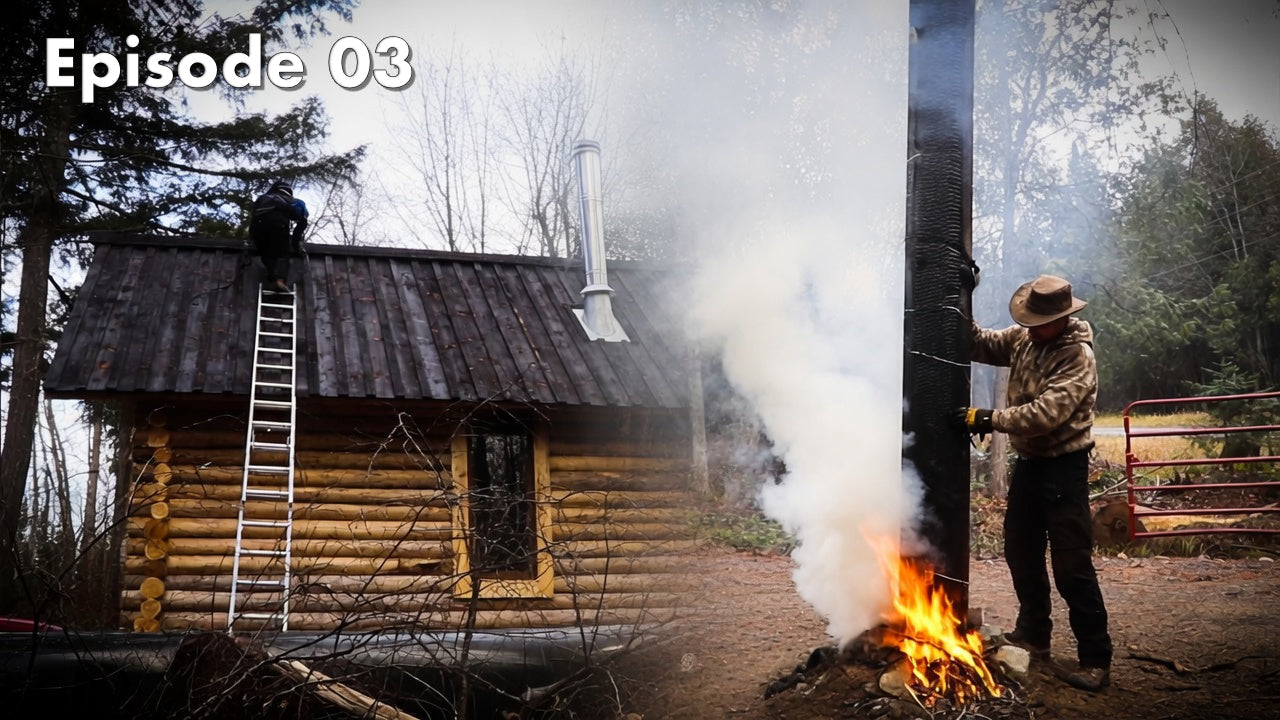
I document the real life — the building, the growing, the hard winters, and everything in between — on the My Self Reliance channel.
Watch on YouTube →

Leave a comment
This site is protected by hCaptcha and the hCaptcha Privacy Policy and Terms of Service apply.